 Daytiles
How to sleep 8 hours a night
Most adults need at least seven hours of sleep, and plenty feel best with eight. Getting there is mostly about timing and routine. Here's how to move your schedule and keep it.
The short version
- Wake up at the same time every day, weekends too. It anchors everything else.
- Get daylight soon after waking, and keep evenings dim.
- Stop caffeine by early afternoon, and give yourself 30 to 60 minutes to wind down.
- Move bedtime earlier in 15-minute steps, not all at once.
Daytiles keeps track of it for you, free on iPhone, iPad and Apple Watch. Get it on the App Store.
How much sleep you need
The American Academy of Sleep Medicine and the CDC say adults need 7 or more hours a night. Some people do best on seven, others on eight or a bit more. If you wake without an alarm feeling rested and stay alert through the day, you're probably getting enough.
To sleep eight hours, you need to be in bed a little longer than that, since it takes time to fall asleep and you may wake briefly in the night. Work back from your wake time: up at 6:30 means lights out around 10:15.
Fix your wake time first
It sounds backwards, but the most useful step for going to bed earlier is getting up at the same time every day. Your body clock sets itself by when you wake and see light. A steady wake time makes you sleepy at a steady time in the evening.
- Pick a wake time you can keep seven days a week, and stick to it within about an hour on weekends.
- Sleeping in late on Saturday and Sunday shifts your clock, and makes Sunday night and Monday morning hard.
- Don't hit snooze for half an hour. Set the alarm for when you actually need to get up.
Go to bed earlier, a little at a time
If you usually fall asleep at midnight, getting into bed at 10 tonight will likely mean lying awake. Move it in steps instead:
- Go to bed 15 minutes earlier, and keep that for a few nights.
- Then another 15 minutes, until you reach your target.
- Keep your wake time fixed the whole way. That's what pulls your sleepiness earlier.
Use light
- Morning light. Get outside, or at least near a bright window, within an hour or so of waking. Daylight is a key signal to your body clock.
- Dim evenings. Lower the lights in the hour or two before bed. Bright overhead lights and screens up close can push your clock later.
- Put the phone down. Scrolling in bed keeps your brain busy as well as lit. Charge your phone outside the bedroom, or at least out of reach.
Watch caffeine and alcohol
- Caffeine stays in your body for hours. A cup at 4 PM can still be working at bedtime. Try stopping at least six hours before bed, and earlier if you're sensitive. Remember tea, cola, energy drinks and chocolate.
- Alcohol can make you drowsy, but it breaks up sleep later in the night. Less of it, and earlier, means better sleep.
- Big meals right before bed can keep you up. Try to finish eating a couple of hours before.
Build a wind-down
Give yourself 30 to 60 minutes between the busy part of the evening and sleep. Doing the same few things in the same order each night tells your body it's time.
- Set an alarm for when your wind-down starts, not just for the morning.
- Pick calm things: a shower, reading a paper book, stretching, light tidying, writing tomorrow's to-do list so it's out of your head.
- Leave work email, news and anything stressful for the morning.
Make the bedroom for sleep
- Cool, dark and quiet. Blackout curtains or an eye mask, earplugs or a fan for steady noise.
- Bed is for sleep. If you can't sleep after about 20 minutes, get up, do something quiet in dim light, and come back when you feel sleepy. Lying there frustrated teaches your brain that bed is for being awake.
- Hide the clock. Watching the time tick by makes it harder to drift off.
Regular daytime exercise helps many people sleep better too. Long or late naps can make it harder to fall asleep at night, so keep naps short and early if you take them.
See a doctor if you snore loudly and someone notices you stop breathing or gasp in your sleep, if you're very sleepy in the day despite enough time in bed, or if trouble sleeping goes on for weeks. Sleep apnea and insomnia are common and treatable, and for long-term insomnia, ask about CBT-I, a talking therapy made for it. Don't start or stop sleep medicine without talking to your doctor or pharmacist.
Set it up in Daytiles
Daytiles has a ready-made Sleep 8 hours habit. It's once a day, so there's nothing to measure: check it off in the morning if you got your sleep.
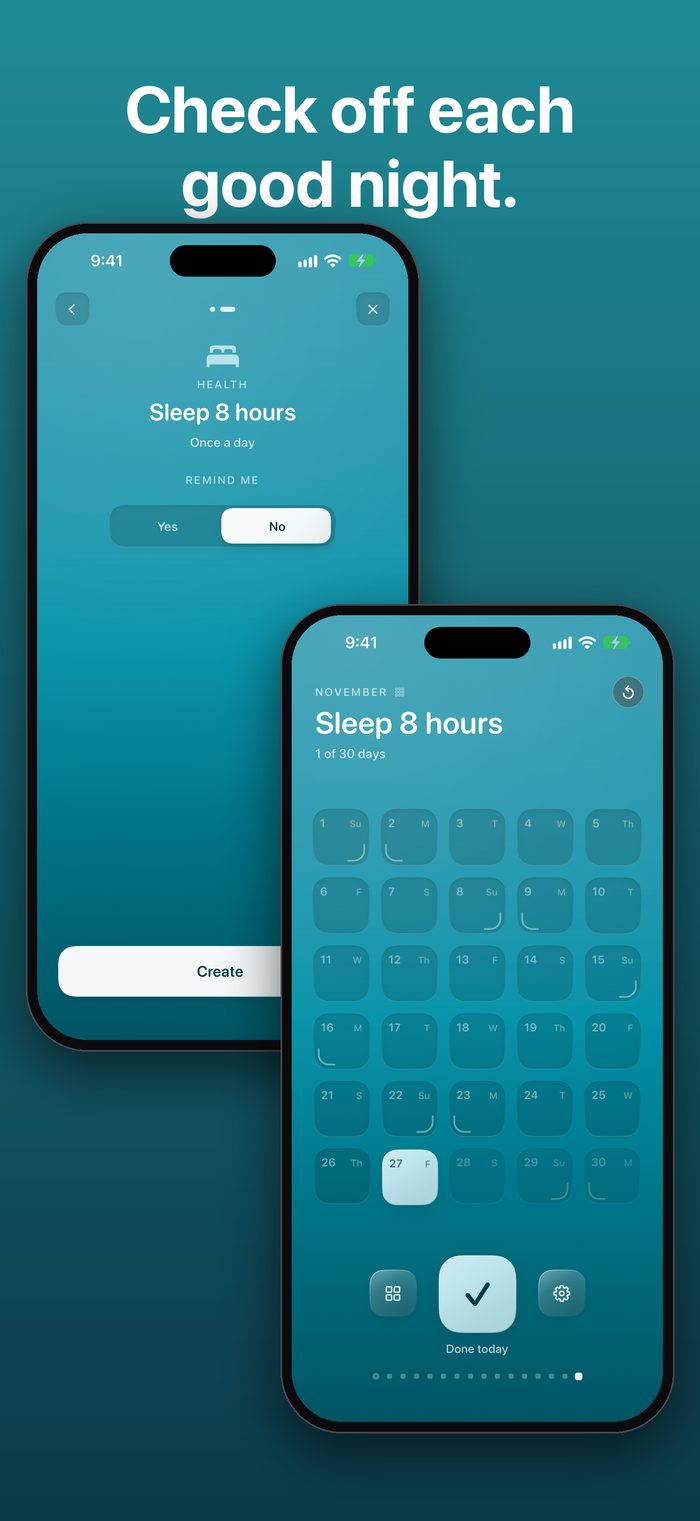
- Tap + on home to make a new habit.
- Under Health, tap Sleep 8 hours.
- Under REMIND ME, choose Yes, tap Evening, and set it for when your wind-down should start Pro.
- Tap Create.
The evening reminder is your cue to start winding down, not to check anything off. In the morning, tap the big button under the month if you slept your eight hours, or seven if that's your goal.
- Missed checking off? Tap yesterday's tile to check it off or clear it.
- A rough night you couldn't help, like a sick child or a red-eye flight? Touch and hold that day, if it's still empty, and choose "Skip this day". A skipped day doesn't break your streak.
- Traveling? Use Pause in Settings, with an end date if you know it. Paused days don't count against you and no reminders come.
- See the pattern. Pinch in on the month to see your year: the share of nights you got your sleep and your best run.
Want the name to match your goal, like "Sleep 7 hours"? Touch and hold the name on its page to rename it.
Sources
Updated November 3, 2026. Daytiles is made by Jason, one person. Tell me if something here is wrong.