 Daytiles
How to stay consistent
Consistency isn't about never having a bad day. It's about having a plan that still works on one. Here's how to keep showing up for workouts, goals and routines when motivation runs out.
The short version
- Decide on a minimum version for bad days, and count it.
- Same time, same place, after the same cue.
- Aim for so many days a week instead of every day.
- Remove the small things that stop you, and look back once a week.
Daytiles keeps track of it for you, free on iPhone, iPad and Apple Watch. Get it on the App Store.
Lower the bar on bad days
Most routines break on the days you're tired, busy or not in the mood. If your only options are "the full thing" or "nothing," those days become nothing. So give yourself a third option: a minimum version that still counts.
- Workout: the full session on good days, ten minutes or a walk on bad ones.
- Reading: a chapter normally, one page when you're wiped out.
- Meditation: ten minutes most days, one minute when it's chaos.
- Language practice: a lesson, or five flashcards.
Decide the minimum now, while you're thinking clearly, not at 10 PM. Then on a bad day there's nothing to decide. You do the small thing and the habit keeps its place in your day.
Same time, same place
Habits form through repetition in a steady situation. The more often the same moment leads to the same action, the less it takes willpower. Pick a slot and protect it:
- Tie it to something that happens every day anyway: after coffee, after work, after the kids are in bed.
- Do it in the same spot when you can.
- If your days are unpredictable, use an event instead of a clock time. "After lunch" works whether lunch is at noon or 2.
More on cues and "After I..., I will..." plans in how to build a habit.
Set a weekly goal instead of a daily one
"Every day" is a fine goal for small things like vitamins or brushing your teeth. For bigger things, like workouts, it sets you up to fail: one busy day and the streak is gone.
Try "four days a week" or "five days a week" instead. You still build the routine, but a bad Tuesday doesn't sink the week. You just do it Wednesday. For exercise this also builds in rest days, which your body needs anyway. Going to the gym consistently and 10,000 steps a day work well this way.
Be realistic. Three days a week that you actually do beats six that you don't.
Remove the friction
Small obstacles add up. A bag you have to pack, shoes in the closet, a long drive to the gym, an app you have to dig for. Each one is a moment to change your mind. Look at your routine and cut steps:
- Lay out what you need the night before.
- Pick the option close to home over the perfect one across town.
- Keep the thing in sight: the water bottle on your desk, the book on the table, the mat on the floor.
- Make logging it one tap, so tracking never becomes the hard part.
And add friction to whatever competes with it. If scrolling eats your evening reading time, leave the phone charging in the kitchen.
Look back once a week
Take five minutes at the end of each week. How many days did you do it? What got in the way on the days you didn't? Is the goal right, too big or too small?
Adjust one thing at a time. If you keep missing Mondays, move it or make Monday a rest day. If it's been easy for a month, raise the bar a little. The point is to keep the plan matched to your real life, not to grade yourself.
Expect dips
Everyone has weeks where it falls apart: illness, travel, deadlines. That's not a lack of discipline. What consistent people do differently is come back quickly. If you miss, do the minimum the next day. See missed a day? for how to restart, and how long it takes to form a habit for why it often takes about two months.
Set it up in Daytiles
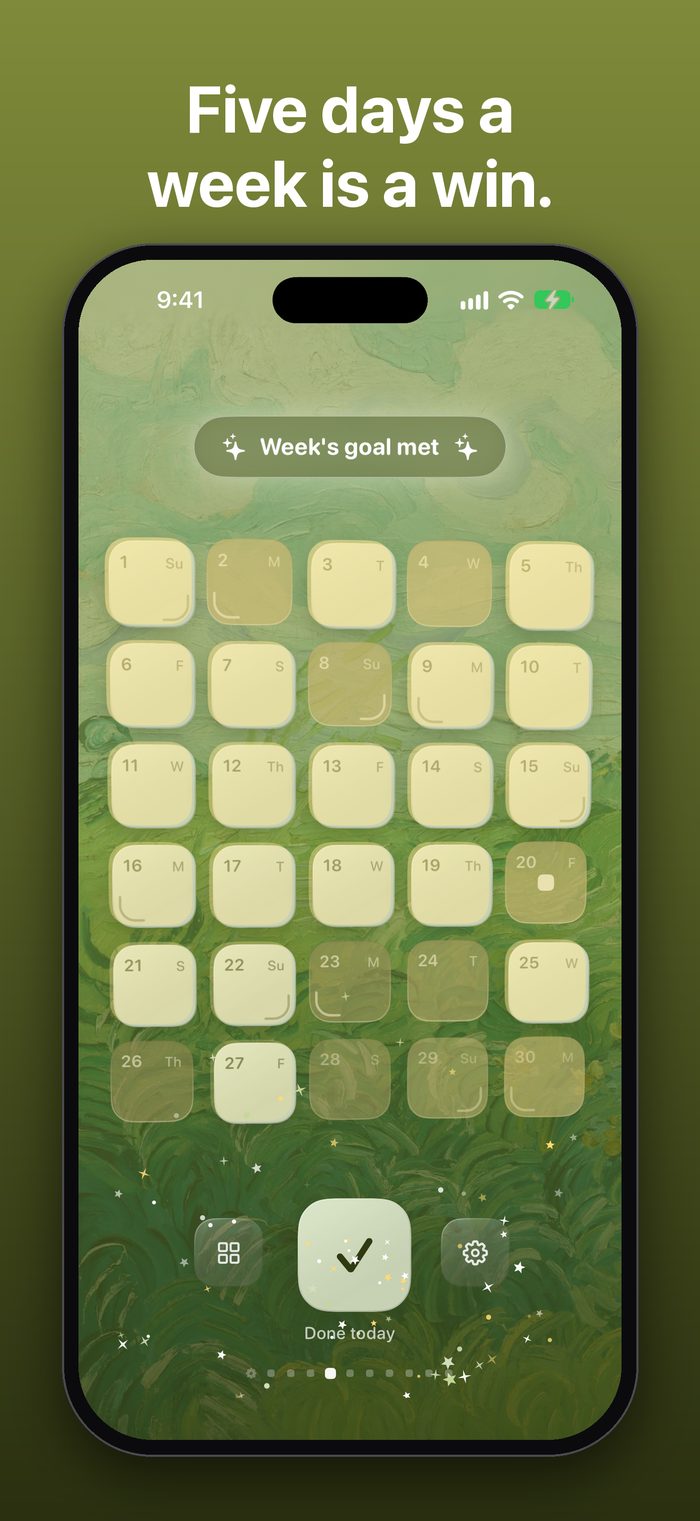
Here's a Walk habit done five days a week. The page shows how many days you've done this week against the goal, and once the goal is met, the days left that week don't count against it.
- Tap + on home, then Make your own.
- Name it, pick Once per day as the goal, and for Which days? choose Some days a week and tap how many.
- Pick a color, choose whether you want a reminder, and tap Create.
Already have the habit? Open its settings (the gear on its page) and change its days there.
- The week's goal. The line under the month says how you're doing, like "3 of 5 this week", and "week done" once you're there. Meeting it gets a celebration, and the remaining days of the week are free.
- Weeks, not just days. Pinch in on the month for the year, and a weekly habit shows how many weeks you met the goal, like "Weekly goal met 30 of 34 weeks". That's the number to watch on a habit you don't do every day.
- Streaks that allow rest. On an every-day or set-days habit, only a scheduled day left blank breaks a run. Skipped and paused days never do.
- Reminders that go quiet. Turn on the morning or evening reminder in Settings. A habit drops out of it once it's done, so on a day you've done everything, nothing comes. Pro gives a habit its own reminder time, or "Learn your habit times" moves the reminder to about 20 minutes after you usually check it off.
- One tap from anywhere. Check it off from the Home Screen or Lock Screen widget, Apple Watch, Control Center or Siri.
- A weekly look back. The month shows which days you did at a glance, and the year adds your share of days and which weekdays you tend to miss.
Daytiles is free for up to three habits, and Pro makes room for as many as you like.
Sources
Updated November 3, 2026. Daytiles is made by Jason, one person. Tell me if something here is wrong.