 Daytiles
How long does it take to form a habit?
You've probably heard 21 days. The research says it usually takes longer, often about two months, and it varies a lot from person to person and habit to habit. That's good news if day 22 still feels like work.
The short version
- The 21-day figure comes from a 1960 self-help book, not a habit study.
- In a UCL study, the median was 66 days, with a range of 18 to 254.
- Simple habits tend to form faster than hard ones.
- Missing one day didn't hurt. Keep going and count in months, not weeks.
Daytiles keeps track of it for you, free on iPhone, iPad and Apple Watch. Get it on the App Store.
Where "21 days" came from
The number goes back to Maxwell Maltz, a plastic surgeon, and his 1960 book Psycho-Cybernetics. He noticed that his patients seemed to take at least about 21 days to get used to a change, like a new face after surgery or the loss of a limb. He was writing about adjusting to a change, and he said "a minimum." Over the years it got retold as "it takes 21 days to form a habit," which isn't what he said and wasn't something he studied.
The trouble with believing it is what happens on day 22. If the habit still takes effort, you can decide you've failed or that it doesn't work for you, right when you're partway there.
What the research found
The best-known study is by Phillippa Lally and colleagues at University College London, published in the European Journal of Social Psychology (online in 2009, in print in 2010). Volunteers each picked one new daily habit to do in the same situation, like eating a piece of fruit with lunch or going for a run before dinner. Every day for 12 weeks they rated how automatic it felt.
- The median was 66 days for the habit to reach its most automatic.
- The range was huge: 18 days for the fastest and an estimated 254 days for the slowest.
- Harder habits took longer. Eating and drinking habits tended to become automatic sooner than exercise ones.
- Missing one day didn't matter. A single missed day didn't set people back in any meaningful way.
A 2024 systematic review in the journal Healthcare (Singh and colleagues) pulled together studies of health habits like eating well and exercise. The median time to form a habit across studies was 59 to 66 days, the averages were longer, and individual people ranged from 4 days to 335 days. So the same shape again: about two months is typical, and anywhere from weeks to most of a year is normal.
What makes it faster
You can't pick your number, but some things reliably help:
- Keep it simple. A glass of water after breakfast forms faster than a 45-minute workout. Start with the small version and grow it later. See how to build a habit.
- Same cue, same place. Habits are built on repetition in a steady situation. Doing it after the same everyday event, like brushing your teeth, gives the habit something to hang on.
- Do it often. Something you do daily gets more practice than something you do weekly, so it tends to become automatic sooner.
- Make it feel good right away. The payoff of most good habits comes weeks later. A small reward now, like checking it off and seeing the day fill in, gives your brain a reason to repeat it today.
- Pick something you want to do. A habit you chose and like is easier to repeat than one you think you should do.
What "formed" feels like
A habit is formed when doing it takes no real decision. You notice you've already done it, or skipping it feels odd. It doesn't mean it's effortless forever. Life changes, like a move, a new baby or an injury, can knock even old habits loose, and you'll rebuild them the same way.
That also means there isn't a finish line where you stop tracking. Many people keep tracking long after the habit is automatic because they like seeing the record.
How to get through the middle
For many people the hardest stretch is the middle: the novelty is gone and it isn't automatic yet. A few things help:
- Plan for two months, not three weeks. Put a check-in date eight or nine weeks out instead of expecting it to be done sooner.
- Lower the bar on bad days. The tiny version still counts as a repetition. How to stay consistent has more on this.
- Don't let one miss become two. One missed day doesn't hurt the process. A long gap does. See missed a day?
- Watch the days add up. A month of filled-in days is proof it's working, even when it doesn't feel like it.
Set it up in Daytiles
Since a habit takes months, it helps to see months. Each habit in Daytiles has a page with a tile for each day, and you can pull back to see the whole year.
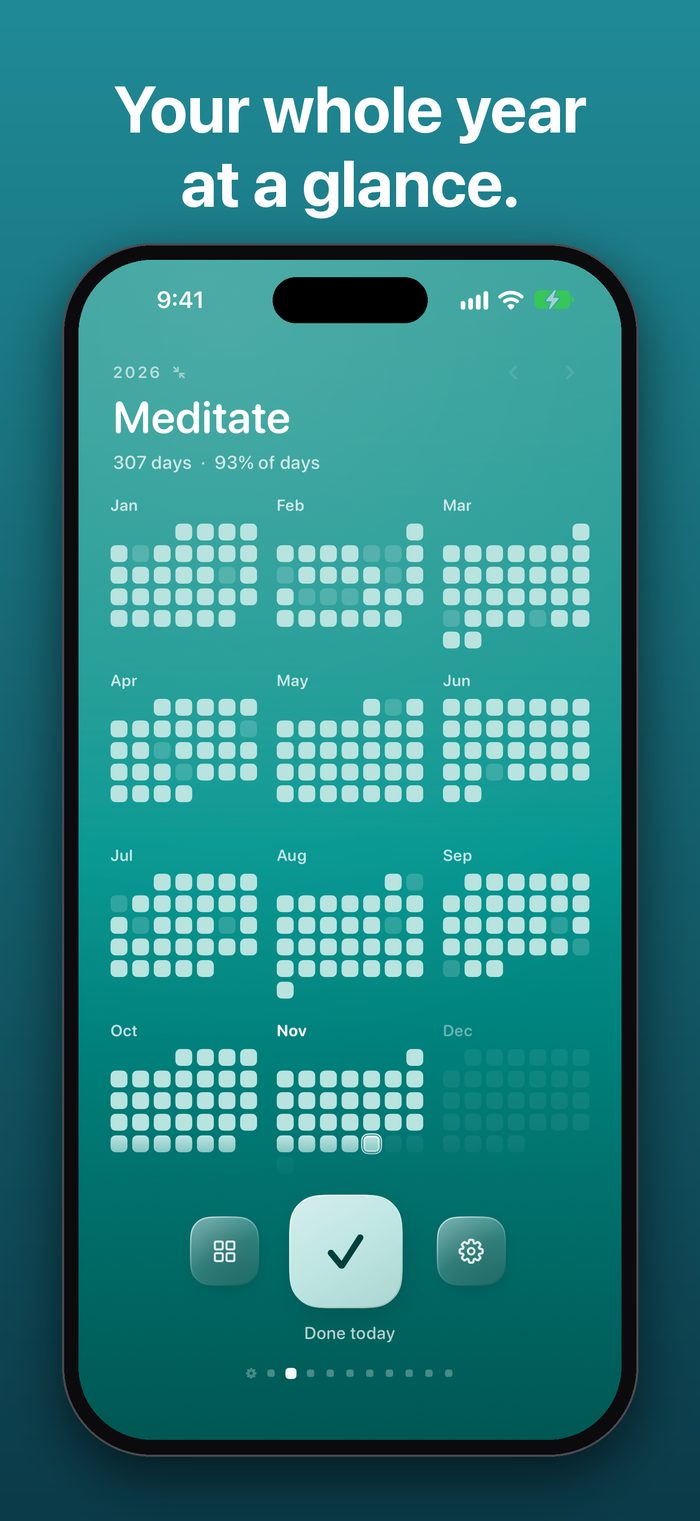
- Tap + on home and pick a ready-made habit, or tap Make your own.
- Check it off each day with the big button under the month, or tap + for a habit you add up, like minutes.
- Pinch in on the month to see the year.
The year shows the days you've done, the share of days, your current run and your best run. It's the easiest way to see whether you're past the shaky part.
- Celebrations along the way. Daytiles marks 7, 14, 21 and 30 days in a row, then every 50, as well as a whole month done. Day 66 doesn't get a party, but day 50 does.
- Streaks that are fair. Only a scheduled day left blank breaks a run. Days you skip, days off your schedule and paused days don't.
- A miss isn't the end. Come back after a few missed days and the habit says "Back at it". Your year keeps every day you did.
- Days you can be honest about. Tap a past day to check it off or clear it, so the record matches what really happened.
Daytiles is free for up to three habits. Pro makes room for as many as you like.
Sources
Updated November 3, 2026. Daytiles is made by Jason, one person. Tell me if something here is wrong.