 Daytiles
How to make exercise a habit
Most people don't need a better workout plan. They need one they'll still be doing in three months. Here's how to make exercise something you do without arguing with yourself about it.
The short version
- Start with something so small it's easy to do on a bad day, like ten minutes.
- Give it a set time and tie it to something you already do every day.
- Pick exercise you like. You'll do it more often than exercise you should do.
- Missing a day doesn't undo the habit. Missing the next one too is what to watch for.
Daytiles keeps track of it for you, free on iPhone, iPad and Apple Watch. Get it on the App Store.
Know what you're aiming for
The CDC in the US and the NHS in the UK both recommend at least 150 minutes of moderate activity a week, like brisk walking, plus muscle-strengthening work on two or more days. That's 30 minutes on five days, or about 20 minutes every day. Vigorous activity, like running, counts double: 75 minutes a week does the same job.
That's the target, not the starting line. Some activity is better than none, and if you're doing nothing now, ten minutes a day is a real step up.
Start smaller than you think
The usual mistake is starting with the plan you'd follow if you were already fit: an hour a day, five days a week. It works for a week or two, then a busy day breaks it and it never restarts.
- Pick an amount you could do on your worst day. A 10-minute walk, one set of squats and push-ups, a short video.
- Do it at that size for a couple of weeks before you add more. You're building the habit of showing up first, and fitness second.
- On days you feel good, do more. But the habit is the small version, so a bad day still counts.
Give it a time and a cue
"I'll exercise when I have time" rarely works, because there's never spare time. Put it somewhere specific.
- Pick a time. Before work, at lunch, straight after work, after the kids are in bed. Mornings get fewer interruptions, but the best time is the one you can keep.
- Tie it to a cue. Something you already do every day: "After I drop the kids off, I walk for 20 minutes." "When I get home, I change into workout clothes before I sit down."
- Make it easy to start. Lay out clothes and shoes the night before. Keep a mat where you'll see it. Fewer steps between you and starting means fewer chances to talk yourself out of it.
- Put it in your calendar like a meeting, especially if your days fill up.
Do something you enjoy
The best exercise for building a habit is the one you don't dread. If you hate running, you won't run for long. Try a few things and keep what you look forward to:
- Walking, cycling, swimming, dancing, a sport, hiking, a class, a home video, gardening, weights.
- Pair it with something you like: a podcast or audiobook you only listen to while moving, or a friend you only see at the class.
- Mix it up if you get bored. The habit is moving at your set time, not one exact workout.
Make it social
Exercising with someone else makes it harder to skip. A walking buddy, a class with the same people each week, a running group, or a friend you check in with. Even telling someone your plan helps.
Expect it to take a while
In a 2009 study at UCL, Lally and colleagues followed people building a new daily habit, including exercise. It took a median of 66 days for the habit to feel automatic, with a wide range from 18 to 254 days. One missed day didn't hurt the process.
So the first couple of months will take effort. That's normal, and it gets easier.
When you miss a day
- One missed day doesn't matter. Get back to it at your next set time.
- Try not to miss twice in a row. Two days off easily turns into two weeks.
- On a day you can't do the full thing, do the smallest version. Five minutes keeps the habit alive.
- If you keep missing, the plan is too big or the time is wrong. Shrink it or move it.
If you have a health condition, are pregnant, or haven't been active in a long time, talk to your doctor about what's safe before you start. Chest pain, dizziness or unusual shortness of breath during exercise means stop and get checked.
Set it up in Daytiles
Daytiles has a ready-made Exercise 30 min habit. Linked to Apple Health, it reads the exercise minutes your Apple Watch counts, so your day fills in while you move.
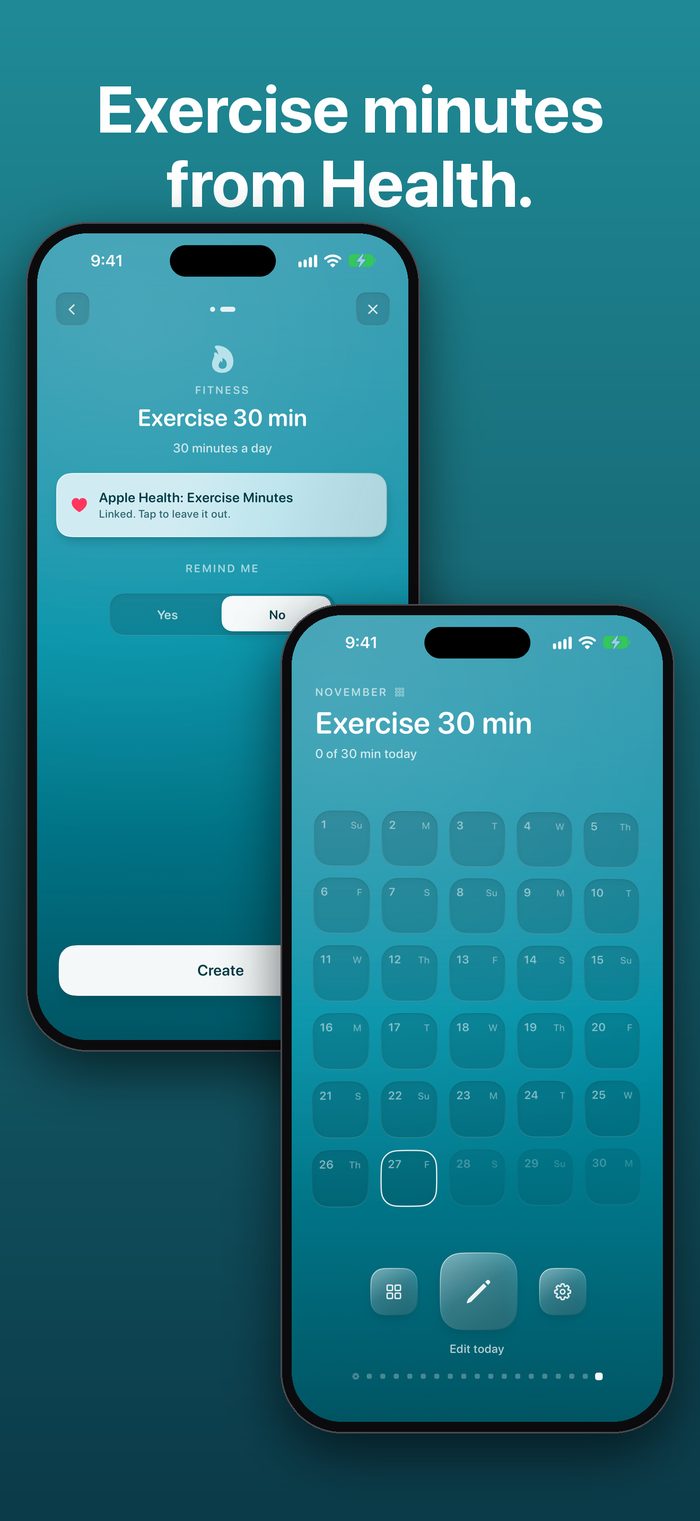
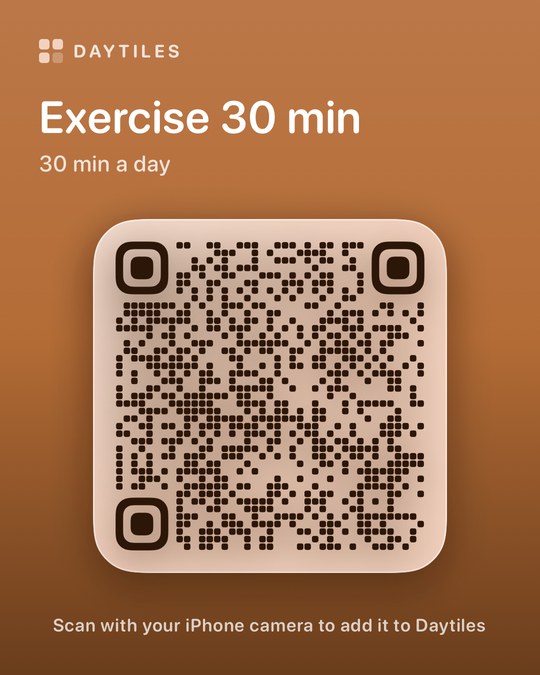
- Tap + on home to make a new habit.
- Under Fitness, tap Exercise 30 min.
- Check that Apple Health: Exercise Minutes is on Pro. It is already.
- Choose whether you want a reminder, then tap Create.
Exercise Minutes come from Apple Watch, which counts each minute of movement at about a brisk walk or harder. Daytiles reads them and doesn't write any back. Each day's tile fills as the minutes come in and is done at 30.
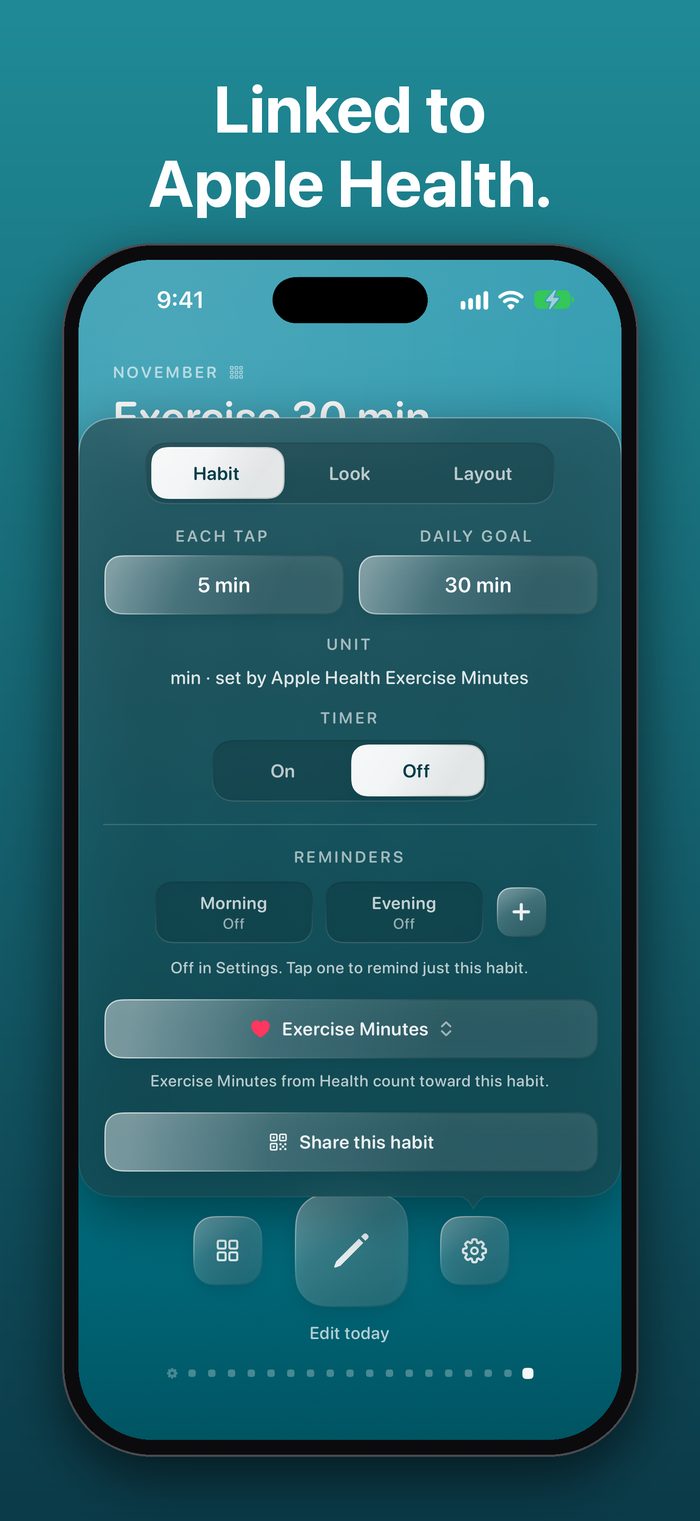
- Edit a day. Since Health fills in the day, tapping the button under the month opens a keypad to edit today's minutes. Use it for a workout you did without your watch.
- Start smaller. Tap the gear and change DAILY GOAL to 10 or 15 minutes. Raise it when that feels easy.
- Rest days. Touch and hold a past empty day and choose "Skip this day", or use "Skip day" on the keypad. A skipped day doesn't break your streak.
- A cue. Set a reminder for your exercise time Pro. Once the day's done, it won't come.
No Apple Watch? Make your own habit instead: tap Make your own, choose A total number, and count it in minutes. In its settings, turn on TIMER Pro. The + becomes start and stop, a Live Activity counts down on your Lock Screen and in the Dynamic Island, and stopping logs the minutes.
Sources
Updated November 3, 2026. Daytiles is made by Jason, one person. Tell me if something here is wrong.