 Daytiles
How to stop snacking at night
Most after-dinner snacking has little to do with hunger. It's the couch, the TV, a long day and food within reach. Change those and the snacking usually goes with them.
The short version
- Eat enough during the day and at dinner, so you aren't truly hungry at 10 PM.
- Close the kitchen after dinner: clean up, lights off, done.
- Brush your teeth early. It's a clear signal that eating is over.
- Ask what you really want: food, a break, company or sleep.
Daytiles keeps track of it for you, free on iPhone, iPad and Apple Watch. Get it on the App Store.
You're not the only one
Snacking after dinner is about as common as habits get. In a 2023 survey of 1,250 US adults for the Sleep Foundation, 93% said they have an after-dinner snack at least once a week. It's also one of the easier habits to change, because it nearly always happens in the same place at the same time.
Decide what your rule is. "Nothing after dinner" is clear. "Kitchen closes at 8 PM" is clear. "Snack less" isn't, because you can't tell at bedtime whether you managed it. If you take medicine with food or have diabetes and need a bedtime snack, plan that in and count only the rest.
Eat enough earlier
If you skip breakfast, rush lunch and have a light dinner, you'll be hungry at night, and willpower loses to real hunger. Before anything else, make sure you're eating regular meals during the day and a dinner that actually fills you up. Real food at dinner, with enough of it, makes the evening much easier.
Close the kitchen
Give the evening a clear end to eating, the way a restaurant closes.
- Clean up right after dinner. Dishes done, food put away, counters wiped, kitchen light off. It feels finished.
- Brush your teeth early. Right after dinner, or as soon as the kitchen is clean. Few people feel like eating with a freshly brushed mouth, and it marks the end of eating for the day.
- Make a warm drink your last thing. Herbal tea or decaf gives your hands something to do on the couch.
- Keep the snacks out of the house, or at least out of sight. If you have to go to the store for chips, you mostly won't.
- Don't eat in front of the TV. If the couch is where snacking lives, eat only at the table.
Ask what you really want
When you head for the kitchen at night, stop for a second and ask what's going on. It's usually one of these:
- Bored. The show's dull and your hands want something to do. Try a puzzle, a book, folding laundry, texting a friend.
- Tired. Being worn out makes food look good. If you're snacking to stay awake, the better answer is going to bed.
- Stressed. A hard day wants a reward. Find a different one: a bath, a walk, a call, music.
- Habit. The ad break, the end of an episode, the time you always used to. Notice the cue and do something else when it comes.
- Actually hungry. It happens, especially if dinner was early or small. Eat something plain and filling, then close the kitchen again, and have more at dinner tomorrow.
Waiting helps too. Tell yourself you'll wait 15 minutes. A craving that comes from boredom or habit often passes in that time.
Go to bed earlier
The longer you're up after dinner, the more time there is to snack. Going to bed a bit earlier cuts the window and helps you sleep. The Sleep Foundation notes that eating close to bedtime is linked to acid reflux, and that eating right before bed can make it harder to fall asleep or make you wake in the night, especially after a big, heavy meal.
If you slip
One evening on the couch with a bag of chips doesn't undo the week. Notice what led there: a light dinner, a long day, snacks in the cupboard. Fix that one thing, and start again tomorrow.
If you often wake up in the night to eat, or eating feels out of your control, talk to your doctor. The same goes if you have diabetes or take medicine with food, before you change when you eat.
Set it up in Daytiles
Daytiles can count your nights without late snacks. There's nothing to check off. Every day counts as clean until you log a slip.
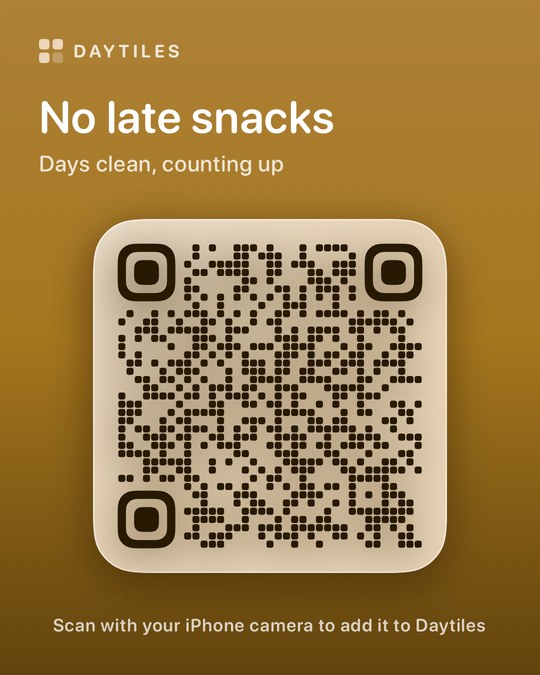
The quickest way is the code on this page. Scan it with your iPhone camera (or tap it on an iPhone) and Daytiles opens with No late snacks set up, ready to add.
- Tap + on home to make a new habit, then tap Make your own.
- For "What do you want to do?", type No late snacks.
- For "What's the goal?", choose Trying to quit.
- Pick a color you like.
- When it asks about reminders, tap No. Quit habits don't send any.
- Tap Create.
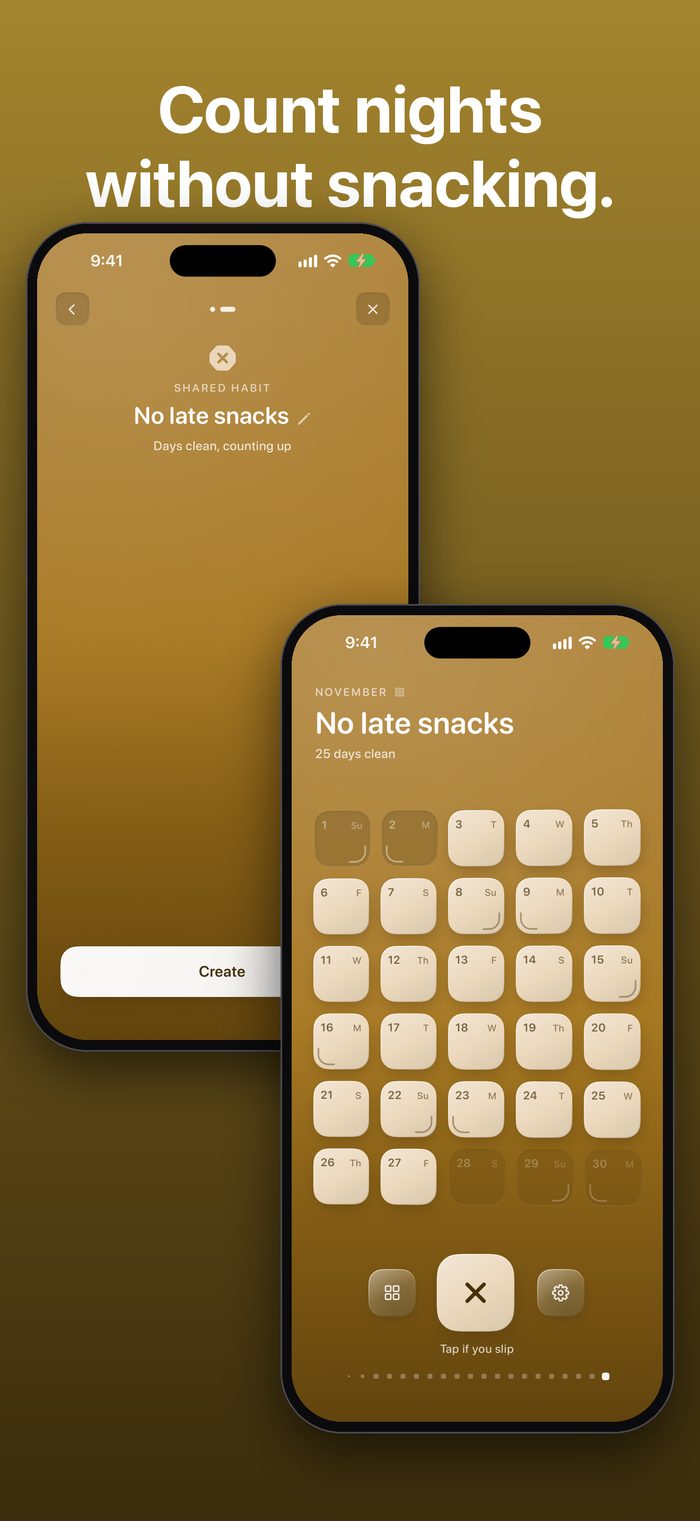
Its page says how many days clean you are, and each clean day lights a tile.
- If you slip, tap the button under the month (it says "Tap if you slip"), or tap the day it happened. The count starts again the next day. Tap again to take it back.
- Your record stays. Pinch in on the month to see your year: clean days, the share of days clean, and your longest clean run.
- Milestones get a moment. A week, two weeks, three weeks and 30 days each get a celebration, and so does a whole month.
- No nagging. Widgets and the Apple Watch show your count but never log a slip by accident.
Brushing your teeth early makes a good end to eating, so add the ready-made Brush teeth habit next to it. With Pro, each check-off is written to Apple Health as a two-minute brushing. Daytiles is free for up to three habits, and Pro makes room for as many as you like.
Sources
Updated November 3, 2026. Daytiles is made by Jason, one person. Tell me if something here is wrong.