 Daytiles
How to stop eating junk food
Junk food is built to be easy to grab and hard to stop eating, so willpower alone is a weak plan. Changing what's around you and when you eat works much better.
The short version
- Decide for yourself what counts as junk food, so there's no arguing with yourself later.
- Don't keep it at home. A lot of snacking is whatever's within reach.
- Eat regular meals with protein and fiber, so you're not starving at 9 p.m.
- Notice when it happens: tired, bored, stressed. Plan a swap for those moments.
Daytiles keeps track of it for you, free on iPhone, iPad and Apple Watch. Get it on the App Store.
Decide what counts
"Junk food" means different things to different people, and a vague goal is easy to wriggle out of. Write down what it means for you. For one person it's chips, candy and fast food. For another it's anything from a vending machine, or eating straight from the bag after dinner. Keep the list short and clear enough that you never have to stop and argue about whether something counts.
Then decide what's still fine. A slice of birthday cake at a party might be allowed; the family-size bag on the couch isn't. Rules you can live with last longer than rules that ban everything.
Don't keep it at home
This is the single most useful step. A lot of junk food gets eaten simply because it's there. If the cookies aren't in the cupboard, a late-night craving has to beat getting dressed and driving to the store, and it usually loses.
- Shop with a list, and not hungry. The decision you make in the store is the one that counts.
- If others in the house want it, ask them to keep it somewhere you don't look: a high shelf, an opaque box, their own drawer.
- Make the easy food the good food. Put fruit on the counter and cut vegetables, yogurt or cheese at the front of the fridge, where the snacks used to be.
- Plan for work and the car. If you always hit the vending machine at 3 p.m. or the drive-through on the way home, bring something with you.
Eat real meals
Skipping meals sets you up. If you barely eat during the day, you get home very hungry and grab whatever's fastest. Regular meals make the evening much calmer.
- Eat breakfast and lunch with some protein in them, like eggs, yogurt, beans, fish or chicken.
- Add fiber: vegetables, fruit, whole grains, beans, lentils.
- Don't let more than four or five hours go by without eating something during the day if you tend to crash later.
There's nothing to count here. The point is to not be running on empty when the snacks call.
Plan a swap
Telling yourself "no" leaves a gap, and gaps get filled. Decide ahead of time what you'll have instead, so the choice is already made when the craving hits.
- Crunchy and salty: popcorn you make yourself, nuts, roasted chickpeas.
- Sweet: fruit, frozen grapes, yogurt with berries, a square or two of dark chocolate if that's not on your list.
- Fizzy drinks: sparkling water with a splash of juice or a slice of lemon.
- Takeout night: something you can make in the same time, or a better choice from the same place.
Know your triggers
Hunger is often only part of it. Pay attention for a week to when you reach for it, and you'll probably see a pattern.
- Tired. In one study, a night without sleep made people want high-calorie food more. Going to bed earlier helps.
- Bored. Eating gives you something to do. Have something else ready: a walk, a call, a game, a shower.
- Stressed. Food can feel calming for a few minutes. Look for other ways to unwind, and be kind to yourself on hard days.
- Habit. The TV goes on and the bag comes out. Change the routine: a cup of tea instead, or eat at the table, not on the couch.
Stopping late-night snacking
Night is when most people struggle, because you're tired, your guard is down and the kitchen is right there. Eat a proper dinner, then decide the kitchen is closed after it. Brushing your teeth early in the evening is a simple signal that eating is done for the day. If you're truly hungry later, have something plain and planned, like fruit or yogurt, rather than whatever's in the cupboard.
Don't aim for perfect
You'll eat junk food again at some point. One bag of chips doesn't undo a week of good days, and treating it like a disaster is what turns one slip into a binge. Notice what led to it, adjust the plan and carry on the next day. Counting the days you managed helps you see the progress a slip doesn't erase.
If eating feels out of control, if you often eat large amounts and feel you can't stop, or if food and guilt take up a lot of your thoughts, talk to your doctor. Those can be signs of an eating disorder, and help works.
Set it up in Daytiles
Daytiles has a ready-made No junk food habit that counts your days without it. There's nothing to check off. Every day counts as clean until you log a slip.
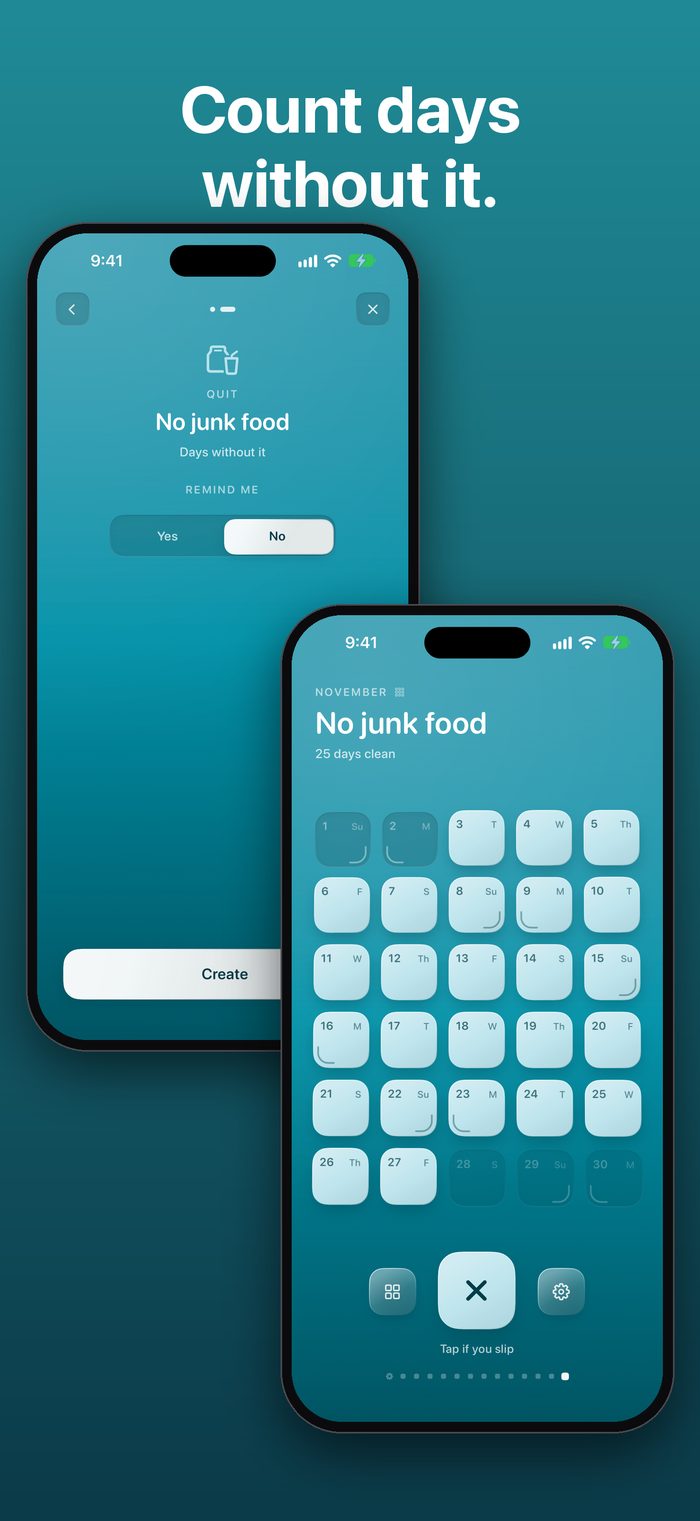
- Tap + on home to make a new habit.
- Under Quit, tap No junk food. It says "Days without it".
- Look it over and tap Create. You can leave reminders off: quit habits don't send any.
Its page shows how many days clean you are, and each clean day lights a tile.
- If you slip, tap the button under the month (it says "Tap if you slip"), or tap the day it happened. The count starts over the next day. Tap again to take it back.
- Make it yours. Touch and hold the name to rename it to what you're really cutting out, like "No late-night snacks" or "No soda".
- See the whole year. Pinch in on the month for your clean days, the share of days clean and your longest clean run. That share going up matters more than a perfect run.
- Milestones get a moment. A week, two weeks, three weeks and 30 days clean each get a celebration, and so does a whole month.
Widgets and the Apple Watch show your count and never log a slip by accident. Daytiles is free for up to three habits, and Pro makes room for as many as you like.
Sources
Updated November 3, 2026. Daytiles is made by Jason, one person. Tell me if something here is wrong.