 Daytiles
How to quit caffeine
Caffeine withdrawal isn't dangerous, but it can make a few days miserable. Tapering down instead of stopping all at once makes it much easier.
The short version
- Taper over a week or two instead of stopping cold. It's the best way to avoid headaches.
- Withdrawal usually starts 12 to 24 hours after your last caffeine, peaks in a day or two, and lasts 2 to 9 days.
- Look for hidden caffeine: tea, soda, energy drinks, chocolate, pre-workout, some pain relievers.
- Get daylight, water and sleep to fill the gap. Count your caffeine-free days.
Daytiles keeps track of it for you, free on iPhone, iPad and Apple Watch. Get it on the App Store.
Know what you're giving up
Before you change anything, add up how much caffeine you have on a normal day. People usually guess low. The FDA's rough figures for a 12-ounce drink:
- Brewed coffee: about 113 to 247 mg
- Black tea: about 71 mg
- Green tea: about 37 mg
- Caffeinated soda: about 23 to 83 mg
- Energy drinks: about 41 to 246 mg
- Decaf coffee or tea: still about 2 to 15 mg per 8 ounces
For most healthy adults, the FDA says up to 400 mg a day isn't usually linked to harmful effects. You might want to quit anyway: for sleep, anxiety, jitters, a racing heart, the cost, or because you don't like needing it to feel normal.
Why tapering beats cold turkey
If you drink caffeine every day, your body gets used to it. Stop suddenly and you get withdrawal. A large 2004 review of the research by Laura Juliano and Roland Griffiths found the main symptoms are headache, tiredness, low energy, drowsiness, low mood, trouble concentrating, irritability and feeling foggy. Some people also get flu-like symptoms, nausea or achy muscles.
The same review found that withdrawal usually:
- starts 12 to 24 hours after your last caffeine,
- is worst at around 20 to 51 hours, so day two is often the hardest,
- and lasts 2 to 9 days.
The more you have each day, the worse it tends to be, but even stopping 100 mg a day, about one cup of coffee, gave some people symptoms. The FDA's advice for cutting back is to do it gradually.
A simple taper
Take a week or two. Cut a little every few days instead of a lot at once.
- Drop one drink at a time. If you have three coffees, go to two for a few days, then one, then none.
- Mix in decaf. Make your coffee half regular and half decaf, then mostly decaf. You keep the ritual while the caffeine drops.
- Make it smaller or weaker. A small instead of a large, a single shot instead of a double, tea instead of coffee.
- Cut the afternoon ones first. They do the most harm to your sleep.
- Pick a stop day. Once you're down to very little, choose a day to stop, ideally one where a slow morning won't matter.
You'll probably still feel a bit flat for a few days. That's normal and it passes.
Find the hidden caffeine
Caffeine turns up in more than coffee. Check:
- Black, green and many iced teas, matcha and chai
- Cola and some other sodas
- Energy drinks, energy shots and pre-workout
- Chocolate, coffee ice cream and some protein or energy bars
- Some gum, supplements and over-the-counter pain relievers
Packaged foods have to list added caffeine in the ingredients, but caffeine that's naturally in something like chocolate isn't listed separately, and restaurants don't have to tell you. If you're not sure, ask.
Get through the flat days
- Sleep. Go to bed a bit earlier for the first week. You may find you need more sleep than you thought.
- Get daylight early. A walk outside in the morning helps you wake up.
- Drink water. Keep a glass where your coffee used to be.
- Keep the ritual. A warm mug of herbal tea or decaf in the morning gives you the same pause without the caffeine.
- Plan for the slump. The mid-afternoon dip is when most people reach for a can. A short walk or a snack works better than you'd think.
Ask your doctor or pharmacist before taking a pain reliever for withdrawal headaches if you take other medicine or have a health condition. If you're pregnant, breastfeeding or trying to conceive, talk to your doctor about caffeine. Don't change any prescribed medicine without talking to them first.
Set it up in Daytiles
Daytiles can count your caffeine-free days for you. There's nothing to check off. Every day counts as clean until you log a slip.
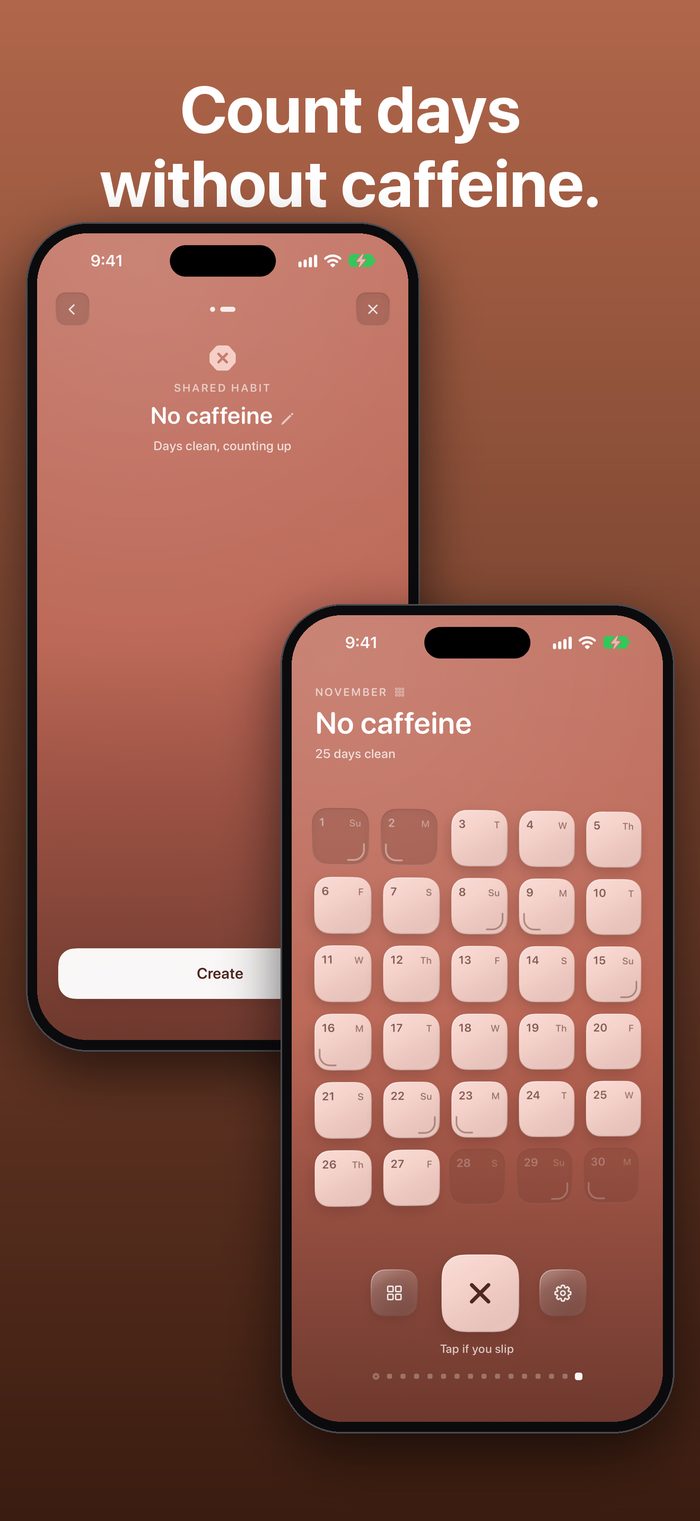
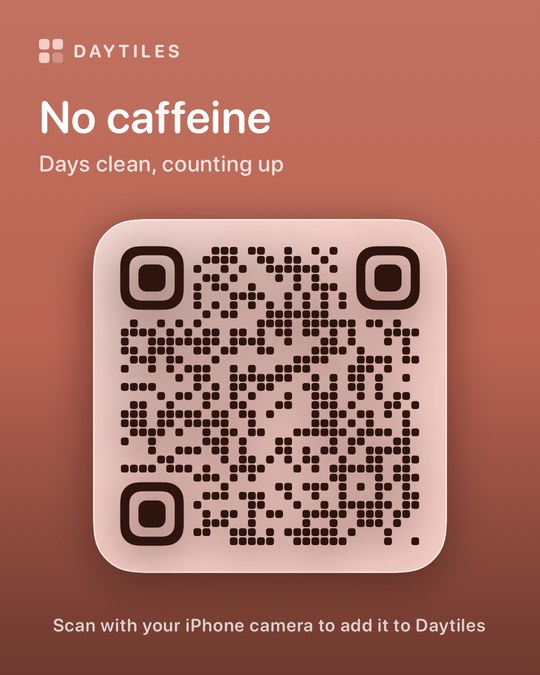
The quickest way is the code on this page. Scan it with your iPhone camera (or tap it on an iPhone) and Daytiles opens with No caffeine set up, ready to add.
- Tap + on home to make a new habit, then tap Make your own.
- For "What do you want to do?", type No caffeine.
- For "What's the goal?", choose Trying to quit.
- Pick a color you like.
- When it asks about reminders, tap No. Quit habits don't send any.
- Tap Create.
Its page says how many days clean you are, and each clean day lights a tile. Add it on your stop day, once the taper is done.
- If you have some, tap the button under the month (it says "Tap if you slip"), or tap the day it happened. The count starts again the next day. Tap again to take it back.
- Your record stays. Pinch in on the month to see your year: clean days, the share of days clean, and your longest clean run.
- Milestones get a moment. A week, two weeks, three weeks and 30 days each get a celebration, and so does a whole month. By the first one, withdrawal is usually over.
- No nagging. Widgets and the Apple Watch show your count but never log a slip by accident.
Only want to cut down? A habit in Daytiles that adds up a total, like cups or milligrams, works toward a goal you reach, so it can't stop you at a limit. Going without is what Daytiles counts best, so a quit habit is the way to track it. If you'd like to keep your morning cup, name the habit for the part you're cutting, like No coffee after noon or No energy drinks, and count the days you stick to it.
Daytiles is free for up to three habits, and Pro makes room for as many as you like.
Sources
Updated November 3, 2026. Daytiles is made by Jason, one person. Tell me if something here is wrong.