 Daytiles
How to build a study habit
Good study habits come down to two things research backs: studying a little most days, and testing yourself. Here's how to build that habit and use the time well.
The short version
- Study a little most days instead of cramming. Spaced practice works better.
- Test yourself. Recalling from memory beats rereading and highlighting.
- Same place, same time, so starting takes no decision.
- Phone in another room while you study.
Daytiles keeps track of it for you, free on iPhone, iPad and Apple Watch. Get it on the App Store.
Spread it out
Cramming the night before can get you through a test, but most of it is gone a week later. Studying the same material in shorter sessions over several days takes about the same time and sticks much better.
This is one of the best-tested findings in learning research. A 2013 review by Dunlosky and colleagues, published by the Association for Psychological Science, looked at ten common study techniques and gave only two a high rating. Spaced practice, spreading study out over time, was one of them. A US Department of Education practice guide from 2007 also recommends spacing learning over time, and going back over key material weeks or months later.
- Thirty minutes a day for five days beats two and a half hours on Sunday.
- Go back to last week's material briefly before starting this week's.
- Before an exam, plan your reviews backwards from the date, so each topic comes up more than once.
Test yourself instead of rereading
The other technique that rated high was practice testing: pulling the answers out of your own memory. The Department of Education guide rates the evidence for quizzing to go back over material as strong. Rereading and highlighting, the two things most students do, rated low in the Dunlosky review. They feel productive because the page looks familiar, but recognizing something isn't the same as being able to recall it.
- Close the book and write down what you remember. Then check what you missed.
- Use flashcards. Question on one side, answer on the other. Say the answer before you flip.
- Do practice questions and past papers, without looking at the notes first.
- Explain it out loud to a friend, or to an empty room, as if you were teaching it.
Getting some wrong is part of it. Checking straight after shows you exactly what to go over next time.
Same place, same time
A study habit is easier to keep when it doesn't need a decision every day. Pick a time and a place and use them every time.
- A time tied to something you already do. "After dinner, I study for 30 minutes." Plans that say exactly when and where you'll act are followed through more often than good intentions. A 2006 review by Gollwitzer and Sheeran of 94 tests found a medium-to-large effect.
- A place used for studying. A desk, a library table, one end of the kitchen table. Somewhere you don't also watch TV or scroll.
- Everything ready. Books, notes, pens and charger there before you sit down, so you don't get up after two minutes.
- A clear first task. At the end of each session, write what you'll start with next time.
Put the phone away
A phone within reach is the easiest distraction there is. Every check breaks your focus, and it takes a while to get back into the work.
- Put it in another room, or in a bag across the room.
- Turn on a Focus on iPhone and Mac so notifications wait until you're done.
- If you need the phone for the material, close everything else first.
- Work in blocks, like 30 minutes on and a five-minute break, and check messages only in the break.
Start small and keep going
If you don't study at all now, don't start with two hours a night. Start with 30 minutes, five days a week, and grow from there. Missing a day happens. Pick it up the next day. In a UCL study by Lally and colleagues, it took a median of 66 days for a daily habit to feel automatic, and one missed day didn't hurt.
Set it up in Daytiles
Track study minutes with a goal of 30 a day. Tap to add 5 minutes at a time, or run a timer for each block and let it log them.
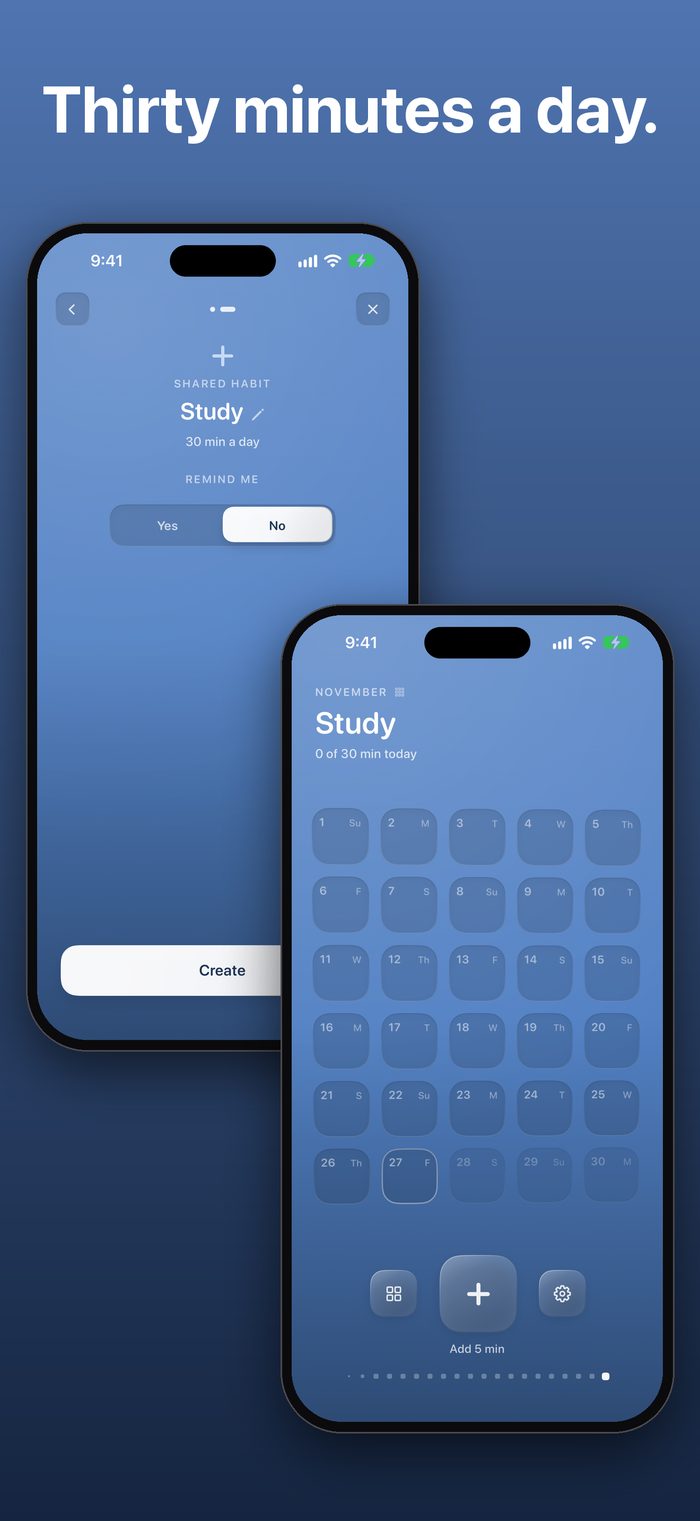
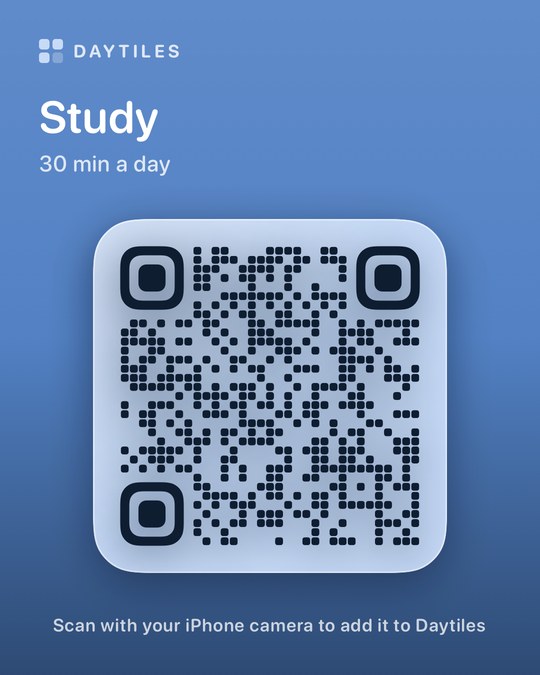
The quickest way is the code on this page. Scan it with your iPhone camera, or tap it on your iPhone, and Daytiles opens with the habit set up, ready to add.
- Tap + on home to make a new habit, then tap Make your own.
- For "What do you want to do?", type Study.
- For "What's the goal?", choose A total number.
- For "What are you adding up?", tap min.
- Pick a color you like.
- When it asks about reminders, tap No. You can add one later in the habit's settings.
- Tap Create. Then tap the gear on its page and set DAILY GOAL to 30 and EACH TAP to 5.
Each day's tile fills as you add minutes and is done at 30. Tap + to add 5 minutes, or touch and hold it for a keypad to type how long you studied.
Use the timer. Tap the gear and turn TIMER on Pro. The + becomes start and stop, and the page shows time done and time to go. A Live Activity counts down on your Lock Screen and in the Dynamic Island, so the phone can stay face down across the room. When you stop, the minutes are logged, and a notification tells you when you've reached 30.
- Start from Control Center. Add the Habit timer control Pro and start a block without opening any app.
- Weekends off? Use the keypad's Skip day: touch and hold + and tap it. Skipped days don't break your streak. For a school holiday, in Settings tap Pause, and paused days don't count against you.
- A nudge at your study time Pro. Without Pro, your morning or evening reminder from Settings can include it. It won't come on a day you've already done your 30.
- Widgets and Apple Watch. Tap the habit in the Today widget to add 5 minutes. Your Watch shows today's habits too, with iCloud sync on.
- See the term. Pinch in on the month to see your year: days done, your current run and your best.
Daytiles is free for up to three habits, and Pro makes room for as many as you like.
Sources
Updated November 3, 2026. Daytiles is made by Jason, one person. Tell me if something here is wrong.