 Daytiles
How to quit gambling
Gambling is built to keep you playing, and online it's open all day, in your pocket. Quitting goes best when you make it hard to place a bet, take money out of reach, and get help early.
The short version
- Block it: self-exclude, install a gambling blocker, and ask your bank to block gambling payments.
- Take money out of reach for a while. Pay bills first, and let someone you trust help with your accounts.
- Don't chase losses. Deal with debt head on.
- Free, confidential help in the US: 1-800-MY-RESET, any time. In the UK: 0808 8020 133.
Daytiles keeps track of it for you, free on iPhone, iPad and Apple Watch. Get it on the App Store.
Decide to stop, not cut back
Many people try to gamble "a bit less" first. It's hard to stick to, because one bet makes the next feel reasonable, and a win or a loss both pull you back in. A clear rule is easier: no betting, no casino apps, no scratch cards, no slots, no sports bets. Decide where the edges are now, like whether the office pool or a raffle counts, so you aren't deciding when you're tempted.
Write down what gambling has cost you: money, time, sleep, trust, the bills you were late on. Keep it somewhere private. It's the thing to read when you feel the pull.
Block it everywhere
Online gambling is the hardest kind to walk away from, because it's always a few taps away. Put as many barriers in the way as you can.
- Self-exclude. You can ask to be barred from gambling sites, apps and casinos. In the UK, GamStop lets you block yourself from gambling websites and apps for 6 months, 1 year or 5 years. In the US, self-exclusion programs are run by the states, and the helpline below can tell you what's available where you live.
- Close your accounts. Every betting and casino account, and turn off their emails, texts and notifications. Delete the apps.
- Install a blocker. Gambling blockers stop gambling websites and apps from opening on your phone and computer. The NHS points to Gamban.
- Ask your bank to block gambling payments. Ask your bank or card provider whether they can block payments to gambling sites and apps. Look in your banking app or call them.
- Avoid the places. Change your route if it passes a casino or betting shop, and skip the bar where the games are always on, at least for a while.
Take money out of reach
The easier money is to get to, the easier it is to gamble. For the first months, make it slow.
- Pay the bills first. Set up automatic payments for rent, the mortgage and other essentials on payday, so they're paid before you can spend the money.
- Let someone help. Some people ask a partner or family member they trust to manage their accounts for a while, or to be a second person on big withdrawals. It can feel like a lot to ask. It's also one of the strongest things you can do.
- Carry less. Leave credit cards at home, carry a small amount of cash, and remove saved cards from your phone and browser.
- Deal with debt. Don't try to win it back. Chasing losses is how a bad week turns into a bad year. Make a list of what you owe and talk to a free debt advice service or your lenders about a plan.
Get through the urge
An urge to gamble often comes with a story: this time will be different, you're due a win, one bet to get even. Recognize the story when you hear it.
- Delay. Wait 15 minutes and do something else while you wait. The urge usually fades.
- Call someone. A friend, someone in your corner, or the helpline.
- Fill the time. Gambling takes up a lot of evenings and weekends. Plan things for those times with people who don't gamble.
- Notice what sets it off. Payday, a big game, boredom, stress, a few drinks, being alone. Plan for each.
Get help, it's free
- In the US, call or text the National Problem Gambling Helpline at 1-800-MY-RESET (1-800-697-3738), or chat at 1800myreset.org. It's free, confidential and open 24 hours a day, and connects you to local help where you live.
- In the UK, the National Gambling Helpline, run by GamCare, is free and open 24 hours a day on 0808 8020 133. The NHS also runs gambling clinics you can refer yourself to.
- Gamblers Anonymous has meetings in many places, and there's support for families too.
If gambling has left you feeling hopeless or thinking about harming yourself, get help now: call or text 988 in the US, or your local emergency number.
If you slip
A bet after weeks of not gambling doesn't undo those weeks. The danger is the thinking that comes next: you've already lost, so you may as well win it back. Stop there. Tell someone, close whatever you opened, and look at what set it off. Then start again the next day.
Set it up in Daytiles
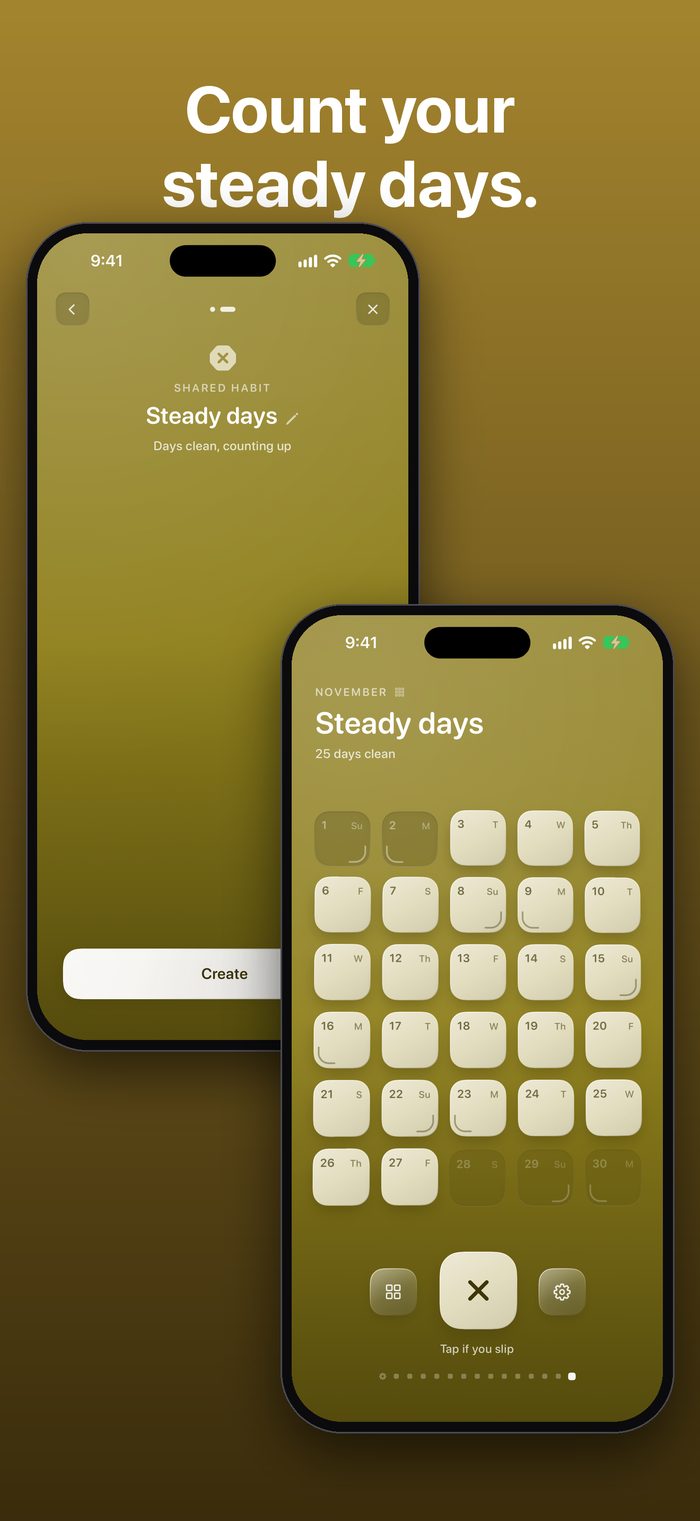
Daytiles can count your days without gambling, and nobody glancing at your phone needs to know what it's for. Give the habit a plain name. The code on this page already calls it Steady days, and you can rename it any time: touch and hold the name on the habit's page. There's nothing to check off. Every day counts as clean until you log a slip.
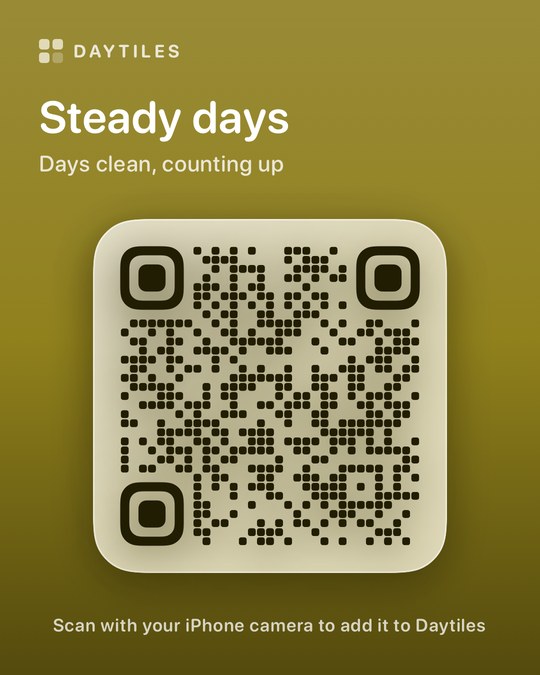
The quickest way is the code on this page. Scan it with your iPhone camera (or tap it on an iPhone) and Daytiles opens with Steady days set up, ready to add.
- Tap + on home to make a new habit, then tap Make your own.
- For "What do you want to do?", type Steady days.
- For "What's the goal?", choose Trying to quit.
- Pick a color you like.
- When it asks about reminders, tap No. Quit habits don't send any.
- Tap Create.
Its page says how many days clean you are, and each clean day lights a tile.
- If you slip, tap the button under the month (it says "Tap if you slip"), or tap the day it happened. The count starts again the next day. Tap again to take it back.
- Your record stays. Pinch in on the month to see your year: clean days, the share of days clean, and your longest clean run. One bad day doesn't take those away.
- Milestones get a moment. A week, two weeks, three weeks and 30 days each get a celebration, and so does a whole month.
- Quiet by design. Quit habits never send reminders, so the name never pops up in a notification. Widgets and the Apple Watch show your count but never log a slip by accident.
Getting your spending under control too? A No-spend day habit sits well next to it. Daytiles is free for up to three habits, and Pro makes room for as many as you like.
Sources
Updated November 3, 2026. Daytiles is made by Jason, one person. Tell me if something here is wrong.