 Daytiles
How to build a morning routine
A good morning routine is short, the same every day, and easy to start half asleep. Here's how to build one you'll still be doing in a month.
The short version
- Keep it short: three or four steps, in the same order every day.
- Get ready the night before so the morning has fewer choices.
- Leave the phone until the routine is done.
- Have a two-minute version for bad days, and count it.
Daytiles keeps track of it for you, free on iPhone, iPad and Apple Watch. Get it on the App Store.
Keep it short and in the same order
The routines that last are boring. Three or four steps, done in the same order, so each one cues the next. You don't decide anything, you just do the next thing.
A routine like this is plenty:
- Get up and drink a glass of water.
- Make the bed.
- Stretch for five minutes.
- Shower and get dressed.
Pick steps that you actually want, not the ones from someone else's list. If you never read in the morning now, a 30-minute reading block is a lot to add on day one. Start with what you can do on your worst morning, and add one step once that feels automatic.
Tie the first step to something that already happens every day, like your alarm or the kettle. Plans that say exactly when and where you'll do something ("when my alarm goes off, I'll drink a glass of water") are followed through more often than vague goals. A 2006 review by Gollwitzer and Sheeran of 94 tests found a medium-to-large effect from this kind of plan.
Get ready the night before
Most mornings fall apart on small decisions. What to wear, where the keys are, what's for breakfast. Every one of those you settle the night before is one less thing to stall on.
- Lay out your clothes, including shoes.
- Fill a glass or bottle of water and leave it by the bed or the sink.
- Put your bag, keys and anything you need by the door.
- Decide breakfast, and set up what you can, like oats in a bowl or the coffee ready to go.
- Put the yoga mat or running shoes where you'll trip over them.
The night before is also where your morning starts. If you're up late, the routine is the first thing to go. The American Academy of Sleep Medicine and the Sleep Research Society say adults need seven or more hours a night, so count back from your alarm and set a bedtime. A night routine helps you get there.
Leave the phone until later
Checking messages or the news first thing hands your morning to other people. Five minutes turns into twenty, and you're behind before you've started.
- Charge the phone outside the bedroom, and use a cheap alarm clock.
- If the phone is your alarm, put it across the room so you have to get up.
- Make a rule: no email or social apps until the last step of the routine is done.
- Set a Focus on iPhone to run until a time you choose, so notifications wait.
Have a minimum version
Some mornings you oversleep, the kids are up early, or you feel awful. On those days the full routine won't happen, and that's where most people quit for good. Decide in advance what the smallest version is: a glass of water and the bed made, two minutes in all. Do that, and count the day.
Keeping the chain going on a bad day matters more than having a perfect one. A habit forms from doing the same thing in the same place often enough, even when some days are small.
Track the parts that matter
You can track the whole routine as one habit: done or not. That's the simplest, and it's what the setup below does. If you want to see which parts slip, track a few of them as their own habits instead, like:
- Drink water, starting with a glass when you get up.
- Stretch, five minutes before the shower.
- Make the bed, the easiest win of the day.
Start with one. Add another when the first is automatic, which for most people takes weeks. In a UCL study by Lally and colleagues, it took a median of 66 days for a daily habit to feel automatic, and missing one day didn't set people back.
Set it up in Daytiles
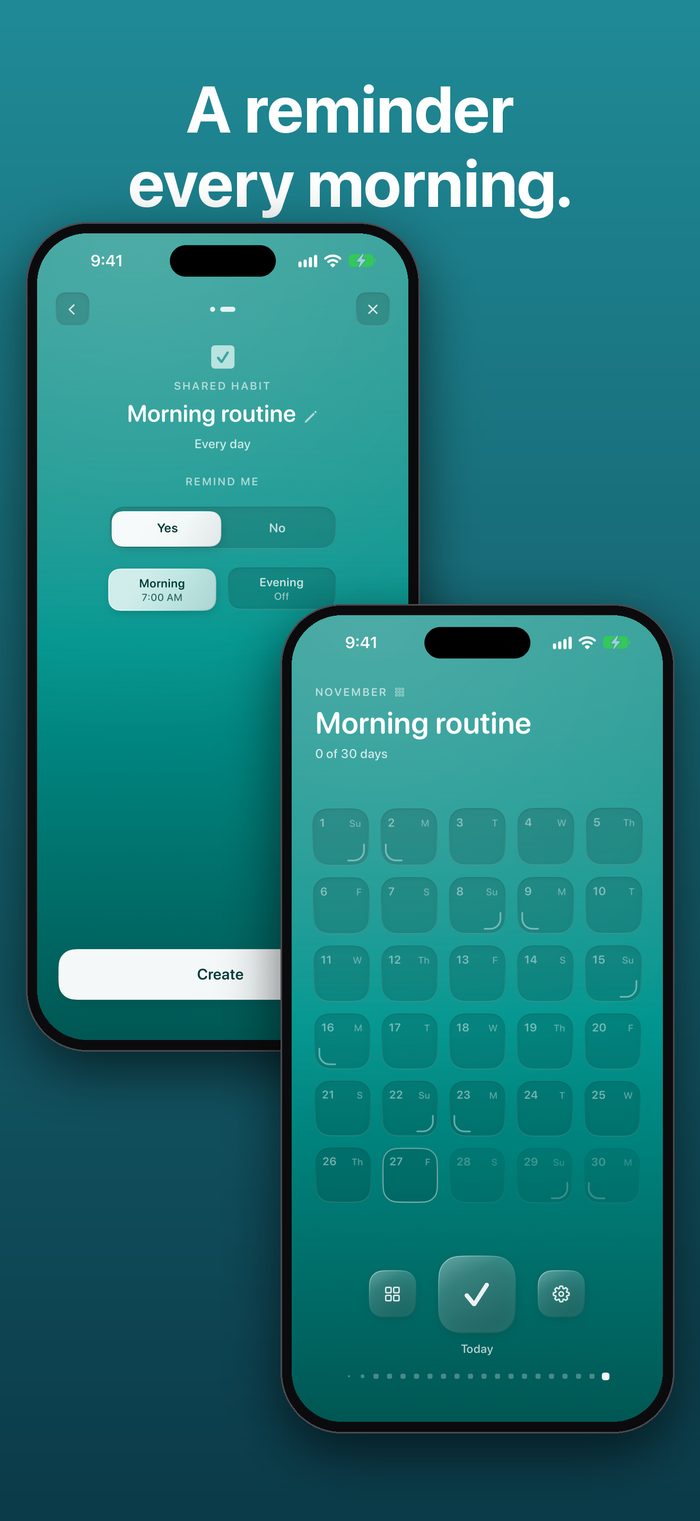
Make one habit for the whole routine and check it off when you're done. A reminder at 7:00 AM gives you a nudge if you haven't, and stays quiet if you have.
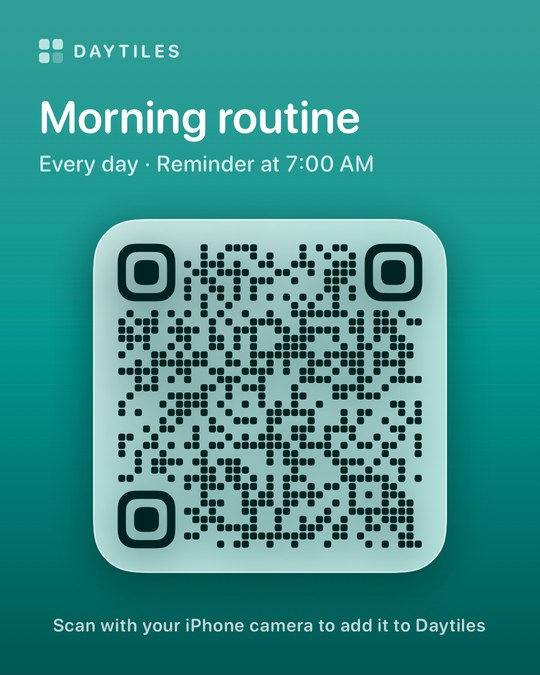
The quickest way is the code on this page. Scan it with your iPhone camera, or tap it on your iPhone, and Daytiles opens with the habit set up, ready to add.
- Tap + on home to make a new habit, then tap Make your own.
- For "What do you want to do?", type Morning routine.
- For "What's the goal?", choose Once per day.
- For "Which days?", choose Every day.
- Pick a color you like.
- When it asks about reminders, tap Yes, tap Morning, and set it to 7:00 AM Pro.
- Tap Create.
Tap the big button under the month when the routine is done. Each day you do it lights a tile.
- The reminder. The code brings the 7:00 AM time with it Pro. Without Pro, the habit comes with your morning reminder from Settings, which starts at 10:00 AM and is the same time for all your habits. Once you've checked it off, it drops out of the reminder, so nothing comes on a day you're already done.
- Learn your habit times Pro moves the reminder to about 20 minutes after you usually check it off, so it fits the mornings you really have.
- Bad day. Touch and hold today's button to skip today. Skipped days don't break your streak. Going away? In Settings, tap Pause, and paused days don't count against you.
- Check it off from the Lock Screen. Add the Today widget to your Home Screen or a Daytiles widget to your Lock Screen, and tap the habit there without opening the app. On Apple Watch, tap its tile (it needs iCloud sync on in Daytiles Settings).
Tracking parts of the routine on their own too? Daytiles is free for up to three habits, and Pro makes room for as many as you like.
Sources
Updated November 3, 2026. Daytiles is made by Jason, one person. Tell me if something here is wrong.